
Stop Making Yourself Small
Choosing Yourself Without Apology

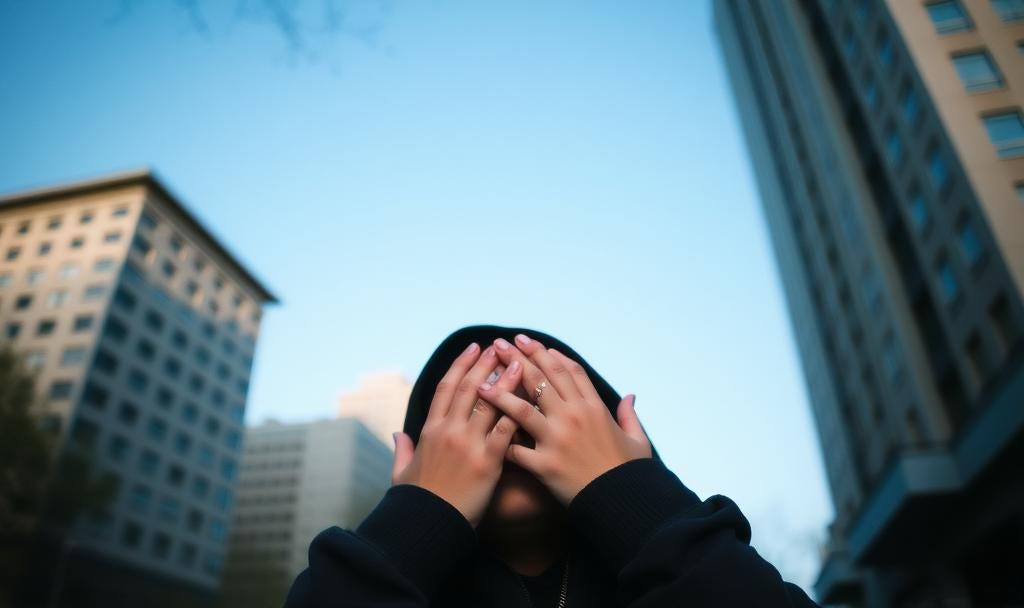
Too often, we shrink ourselves to make others more comfortable — and it's exhausting, harmful, and unnecessary. I remember sitting in a meeting, an idea burning inside me, but choosing to stay silent because the last time I spoke up passionately, someone called me a bit much. That moment of self-censorship stayed with me, a small but significant surrender of my authentic voice.
We owe it to ourselves — and to the world — to speak, write, and exist fully, without apology or dilution. The practice of making ourselves small might feel like a survival strategy, but it exacts a devastating toll on our wellbeing, our creativity, and our potential impact.
Why We Feel Pressured to Shrink
Cultural Conditioning
Society teaches politeness, deference, and don't rock the boat behaviour from an early age, especially to members of marginalised groups. Girls learn to be nice above all else. People of colour are taught that success means assimilating to dominant cultural norms. Those from working-class backgrounds often learn that questioning authority is dangerous.
Speaking directly or passionately is frequently labelled as too much, angry, aggressive, or unprofessional. These labels create powerful incentives to tone down our language, soften our stance, and diminish our presence — all to accommodate others' comfort.
Tone-Policing
The subtle (and not-so-subtle) push to modify your tone to suit the comfort of others operates as a form of social control. I agree with what you're saying, but could you say it more nicely? becomes a way to redirect attention from the content of your message to its delivery.
Over time, we internalise this policing, becoming our own censors. Before speaking, we run our thoughts through filters: Is this too angry? Too political? Too emotional? Too controversial? This constant self-editing becomes so automatic that we may no longer recognise how much of ourselves we're holding back.
The Cost of Making Yourself Small
Losing Authenticity
When we water down our voice to make it more palatable, we inevitably lose our truth. Creative expression suffers — writing becomes safe rather than powerful, art becomes decorative rather than transformative, and conversations remain superficial rather than meaningful.
Emotional honesty is sacrificed on the altar of acceptability. We learn to package our anger as concern, our passion as interest, and our deep convictions as suggestions. Each translation moves us further from our authentic selves.
Personal Well-Being
The psychological toll of constant self-editing is immense. Living in perpetual awareness of how you're being perceived creates stress, anxiety, and exhaustion. The cognitive load of maintaining different versions of yourself — the real you versus the acceptable you — drains energy that could be directed toward creativity and growth.
Resentment builds over time. Every accommodating smile, every swallowed truth, every dampened emotional response contributes to a reservoir of bitterness that can eventually overflow into depression or explosive anger.
Cultural Silencing
When individuals shrink themselves, entire perspectives are lost from public discourse. This silencing falls most heavily on those already marginalised, whose experiences and insights are precisely what our collective conversation most needs.
The result is a narrowed cultural imagination. We lose the language, stories, and voices that might challenge dominant narratives and offer alternative visions. What appears as social harmony is often just the silence of those who have been taught their full expression is unwelcome.
Why Full Expression Matters
Your Truth is Valid
Every voice has a place, and every story matters. Your experiences, insights, and perspectives aren't just valid — they're necessary contributions to our collective understanding. Without them, our shared reality remains incomplete.
Passion, anger, joy, grief — all emotions are real and worthy in writing and speaking. Emotional truth is not a liability to be managed but a source of power and connection. Some of the most transformative writing and art comes from creators who refuse to temper their emotional honesty.
Examples That Inspire
Consider the work of writers like Audre Lorde, who wrote, "Your silence will not protect you," challenging the myth that making ourselves small offers safety. Or bell hooks, whose direct confrontation of uncomfortable truths transformed academic and popular discourse. Artists like Frida Kahlo and Jean-Michel Basquiat refused to make their pain palatable and created work that continues to resonate precisely because of its unfiltered honesty.
Being Fully Human
Expressing your whole self does not mean being angry 24/7 — it means being fully human, with all the complexity that entails. It means allowing yourself access to your full emotional range, from tender vulnerability to righteous anger, from playful joy to profound grief.
When we reclaim this range, we discover parts of ourselves that have been dormant, waiting for permission to emerge. These aspects often hold our greatest creative potential and capacity for connection.
Choosing Yourself Without Apology
Living Your Truth
You don't need permission to exist loudly. Your voice, your presence, your truth — these are not privileges to be earned but rights you already possess. Expressing yourself fully is not rude — it's necessary for your wellbeing and for the communities you're part of.
This doesn't mean being thoughtless or cruel. Rather, it means recognising that softening your truth to make it more comfortable for others is a form of self-betrayal that ultimately serves no one.
Rejecting Invalid Criticism
Be nicer or say it differently critiques are often about controlling the message, not about genuine dialogue. Learn to distinguish between feedback that helps you communicate more effectively and feedback that simply wants you to say something different than what you're saying.
When you speak your truth, some will respond with defensiveness or dismissal. This reaction isn't evidence that you should have stayed small — it's often evidence that your words have power and are disrupting comfortable patterns.
Healthy Boundaries
Not every audience deserves access to your softened, censored self. Some relationships and spaces can only thrive when you bring your whole self to them, while others may never be able to accommodate your authentic expression.
Setting boundaries around where and with whom you'll make yourself small is a form of self-respect. Choose carefully the spaces where you'll invest your full energy and presence, recognising that some environments may never be worthy of your uncensored truth.
Practical Encouragement to Create Boldly
Speak/Write Without Watering Down
When you have something to say, say it as you feel it. First drafts should be fearless — editing for clarity comes later, but never edit to diminish your truth. Trust that your voice, in its natural state, has value and power.
Authentic writing connects more deeply than polished lies. Readers respond to honesty, even when it's imperfect or uncomfortable. The writing that changes lives is rarely the most proper or palatable, but the most truthful.
Creative Spaces
The internet gives us unprecedented ability to tell raw, real stories without waiting for approval. Create spaces — blogs, podcasts, social media accounts, newsletters — where your unfiltered voice is welcome. Build communities around authentic expression rather than palatability.
Seek out others who create boldly, who refuse to make themselves small. Their courage becomes contagious, making it easier for you to stand in your truth. Collective bravery creates ripples that can transform cultural expectations.
Final Encouragement
The world needs your voice — not the version that was shrunk to fit a smaller box. Your boldness creates permission for others to be bold. Your honesty makes space for others' truth. Your refusal to diminish yourself becomes an invitation for others to stand tall.
Shrinking yourself might make others more comfortable, but it will destroy your soul and silence your gifts. The habit of self-diminishment might feel like protection, but it's a prison that keeps your true potential locked away.
In my own journey, choosing fullness over smallness has transformed not just my writing but my life. Words flow more freely when I'm not constantly filtering them. Relationships deepen when I bring my whole self to them. Creative ideas emerge more readily when I'm not afraid of being too much.
Don't wait for permission. Don't wait for a perfect moment. Speak now, write now, live fully now — without apology. The world doesn't need more palatable, proper, reduced versions of ourselves. It needs our fire, our truth, our full humanity — unapologetically expressed in all its messy, powerful glory.